 Fans of the late crime novelist Stieg Larsson are getting lost in the Swedish countryside, searching for the quaint town of Hedestad featured in "The Girl With the Dragon Tattoo."
The problem is, it doesn't exist.
But international readers of Larsson's best-selling Millennium crime trilogy could be excused for thinking otherwise, because most locations in the books are authentic.
Some of them include the Kaffebar cafe in Stockholm - a favorite haunt of Larsson's fictional journalist Mikael Blomkvist - and the Kvarnen bar - where Larsson has tattooed computer hacker Lisbeth Salander spending evenings with her friends from the rock band Evil Fingers.
Both places are located on the trendy island of Sodermalm, a former working-class area with narrow streets where old wooden cottages are squeezed between 20th century stone houses.
 The hilly Stockholm district - with popular bars, fashion stores and art galleries - is one of many islands that form the city center and the home of Larsson's characters.
Blomkvist and Salander, the trilogy's main characters, both have apartments there. Salander's friendly first legal guardian, Holger Palmgren, also lived there before he was hospitalized.
Eager Millennium fans can venture out on their own, visiting the scenes of Blomkvist's and Salander's exploits with maps sold by the tourist office. Or they can take the Stockholm City Museum's Larsson tour.
Starting with Blomkvist's small apartment in the brown 19th century building at 1 Bellmansgatan, Millennium fans can relive the books' plots in the real settings, while listening to the guide's detailed descriptions.
"It is great to identify the addresses and see what the buildings look like," said Roland Ojeda, a retired banker from San Francisco, who took the tour in June with his wife, Linda. "I think it brings it to life."
Larsson's books about a darker side of Sweden, where Blomkvist and Salander become involved in murder mysteries, sex trafficking scandals and a secret government department, have sold more than 30 million copies worldwide. The tour has attracted visitors from as far away as Japan, Canada and Australia, said Eva Palmqvist, who leads the museum's tour.


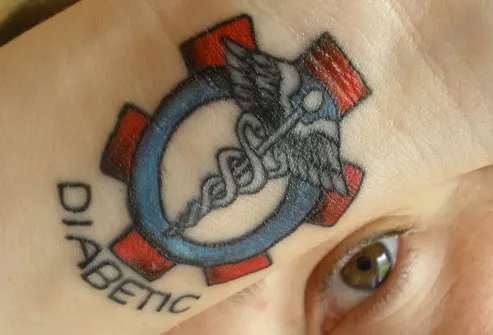




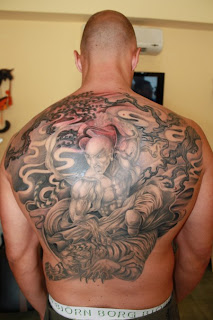

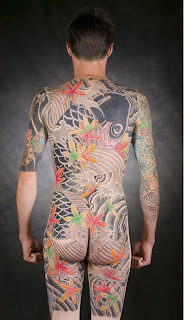


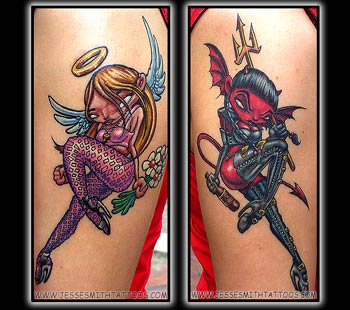


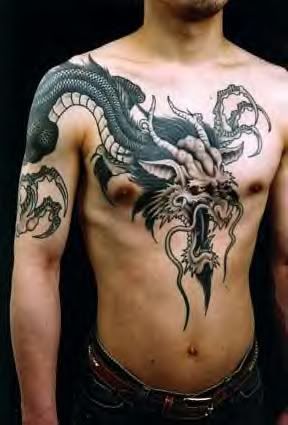 At the beginning of the Meiji period the Japanese government, to protect the image and make a good impression in the west, banning tattoos, and take the connotation irezumi crime. Nevertheless, fascinated foreigners went to Japan seeking the skills tattoo artists, and traditional tattooing continued underground. Tattoos validated by the occupation forces in 1945, but unfortunately still maintaining the image of criminality. For years, traditional Japanese tattoos are associated with the yakuza, Japanese mafia known, and many companies in Japan (such as public baths, fitness center and hot springs) still ban customers with tattoos. Tattoos and other forms of body decoration and body modification, as in most of the Western world, which is more popular in Japan. However, those young Japanese who choose to get a tattoo of the most frequently chose "one point" designs - small designs that can be completed in one sitting - usually in American or tribal styles.
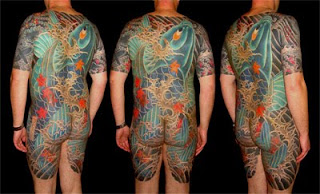
 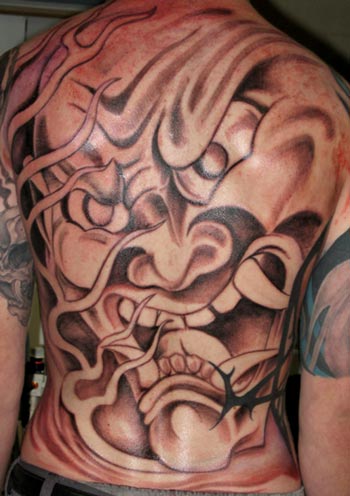 Traditional Irezumi still done by specialist tattooists, but this is painful, time consuming and expensive: according to a traditional body (which cover the arms, back, legs and upper chest, but leave room untattooed in the middle of the body) can take 1-5 years once-per-week visits to complete and cost more than U.S. $ 30,000. Although many of the younger generation find the whole concept of fashionable and trendy tattoo, most Japanese people still consider it to be something to do with the underworld of gangsters and mafia. Most of the younger generation, however, tend to get tattoos on their upper arms in place that can not be directly visible. However, with Western influence is more popular in Japan, tattooing is now being shown off more often than before. Japanese tattoo symbols and designs date back as far as 5000 BC. It is also very possible that the art of tattooing in Japan could have existed well before this date. Japanese statues of clay that dates right back to 5 BC Millennia also been found with their faces carved or painted so that the tattoo represents. As far as archaeologists and historians can tell,
 the tattoo in the past it was believed to have held a special magic or religious meaning bearer. Kanji is the writing style of calligraphy used by the Japanese. It was a popular choice among those looking for the best Japanese tattoo symbols or designs. By using this starch method, you can create and display any message you want. Most popular kanji characters shown today is translated into a number of words and emotions such as love, happiness, laughter, wealth, love, beautiful, sadness, loyalty and duty. From the beautiful, exotic flowers fierce Japanese dragon tattoo, or even complex designed great samurai warriors, Japanese tattoo symbols and design work for everyone and anyone. A Japanese koi fish tattoo swim lazily in her hips, a beautiful little ring cherry blossoms combined with a tire arm or the ankle, looks fierce emerald serpent slithering up the calf man, or a samurai warrior and hugged a woman in the back - as good art This seems Horimono - you may find yourself very well because it attracted more beautiful all the symbols and Japanese designs done on your body


